UT Quality Canada fields union crews for pipeline and industrial construction as a QCCC Signatory Contractor, with technicians certified to CGSB — the complete conventional and digital NDT suite, led by our proprietary UT Scan automated ultrasonic technology and supported from our Alberta base in Acheson (Edmonton region), a facility shared with Argus NDT.
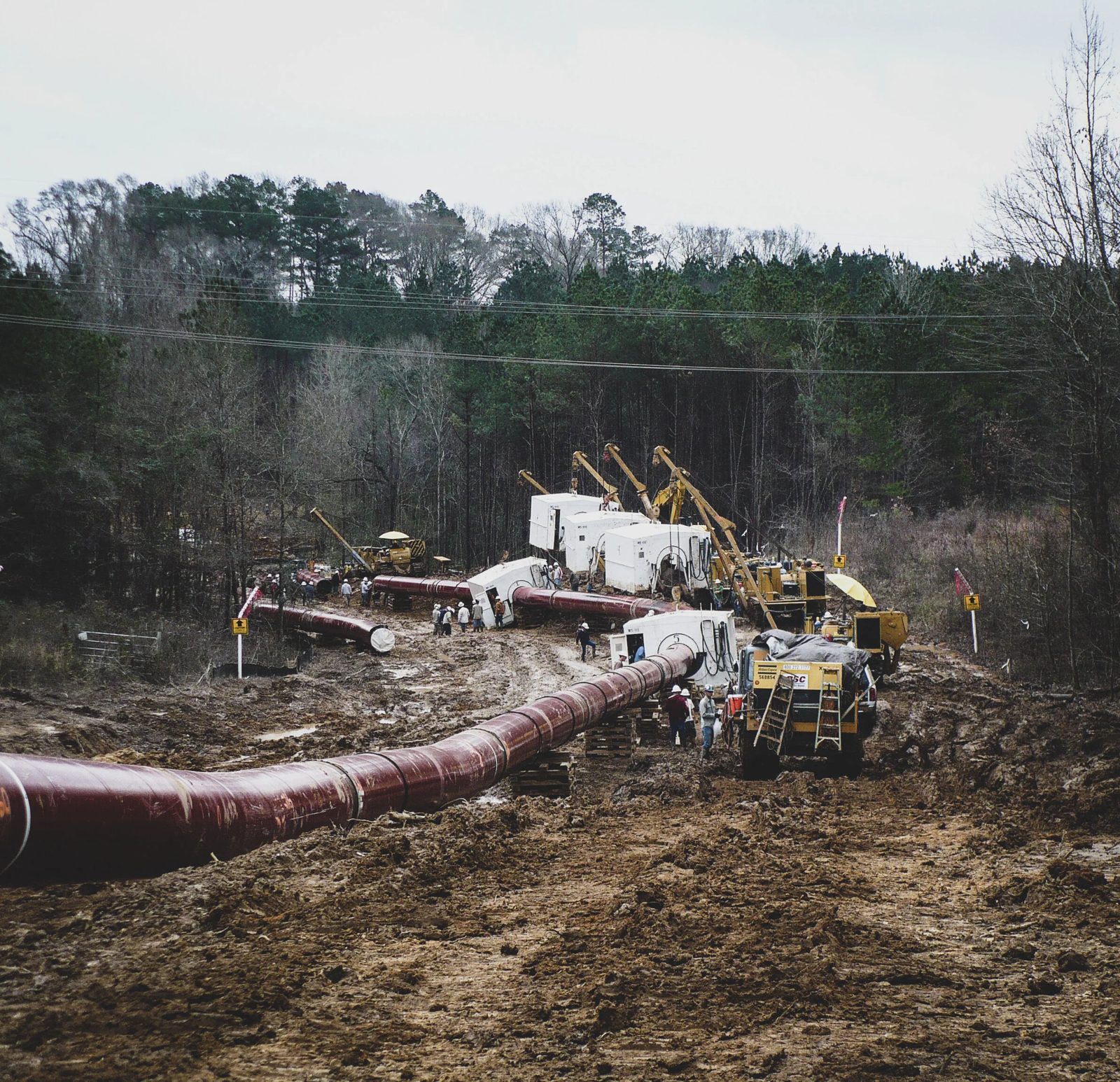
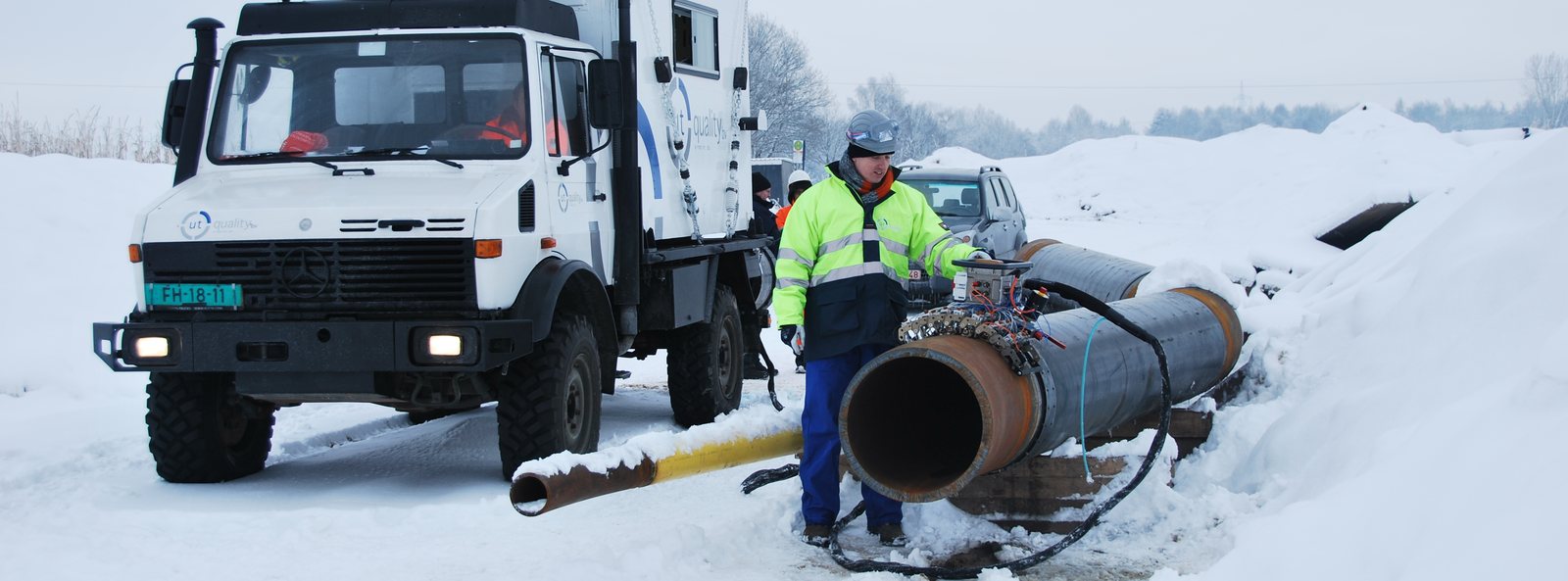
UT Quality Canada is a union NDT operation. For pipeline and energy owners running union labour — or projects under a labour agreement — our crews come qualified under the QCCC agreement, so NDT can be staffed on the same labour basis as the rest of the spread.
UT Quality Canada is a Signatory Contractor with the Quality Control Council of Canada (QCCC) — which represents Canadian NDT personnel through the Boilermakers and United Association structure (in Alberta: Boilermakers Lodge 146, UA Local 488 Edmonton, UA Local 496 Calgary). Crews for union mainline and facility work.
Trained and certified to CGSB, and working to standardized written procedures on every spread.
Encoded, recordable AUT data and full interpretation records that stand up to audit — acceptance decisions the owner can defend.
UT Quality Canada delivers the complete range of nondestructive testing — from automated ultrasonics to surface methods, with in-house Level II/III interpretation.
Proprietary UT Scan AUT — zonal phased array (PAUT) with TOFD — for fast, repeatable, fully encoded girth-weld inspection on pipeline construction. Full AUT spreads for mainline construction, with production-rate coverage and a defensible record.
Manual UT for welds, corrosion mapping and thickness — plus semi-automated UT: encoded phased array (PAUT) and TOFD on a hand-driven scanner for tie-ins, repair welds and fittings where an AUT band will not fit.
Computed radiography (CR), direct radiography (DR), real-time radiography (RTR), and conventional film RT.
Magnetic particle (MT), liquid penetrant (PT), and visual testing (VT) for surface and near-surface indications.
In-house Level II technicians, Level III oversight, and remote Level III interpretation for fast, qualified acceptance decisions.
Legacy RT weld film converted to searchable digital weld records in the DICONDE format, indexed to job, line and weld, with a documented chain of custody. Film digitization →
Our phased-array and automated ultrasonic systems put encoded, recordable data behind every girth weld — faster than film, and with a defensible digital record the owner can audit.
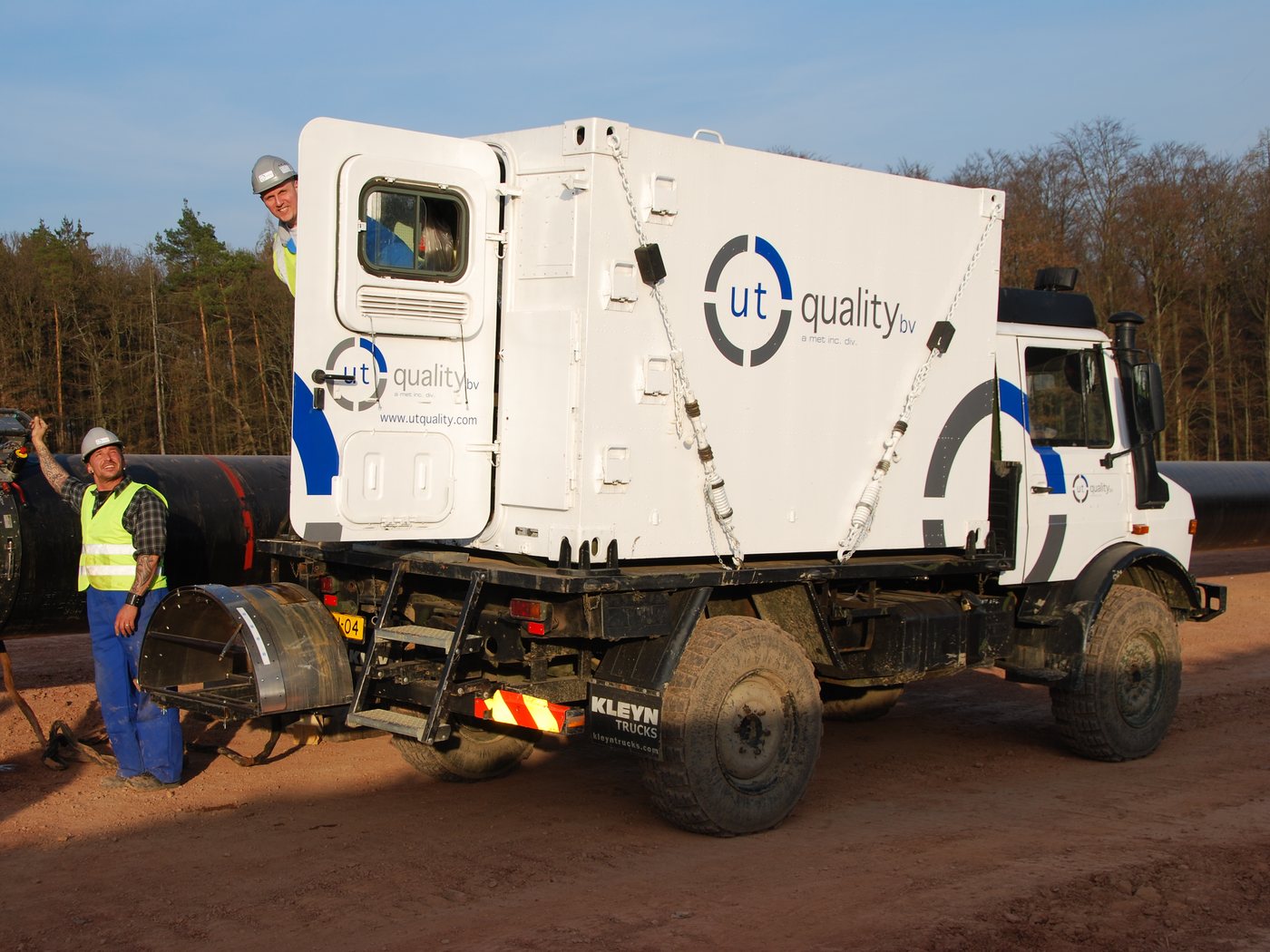
Two different things, kept distinct: the codes and standards a project is inspected to, and the certifications our personnel hold.
Codes & standards we work to
Personnel certifications (Canada)
NRCan / CGSB-certified personnel to CAN/CGSB-48.9712 / ISO 9712 — with CEDO certification where technicians operate exposure devices.
Level II and Level III technicians trained and qualified in-house — the same interpretation standard on every crew and every spread.
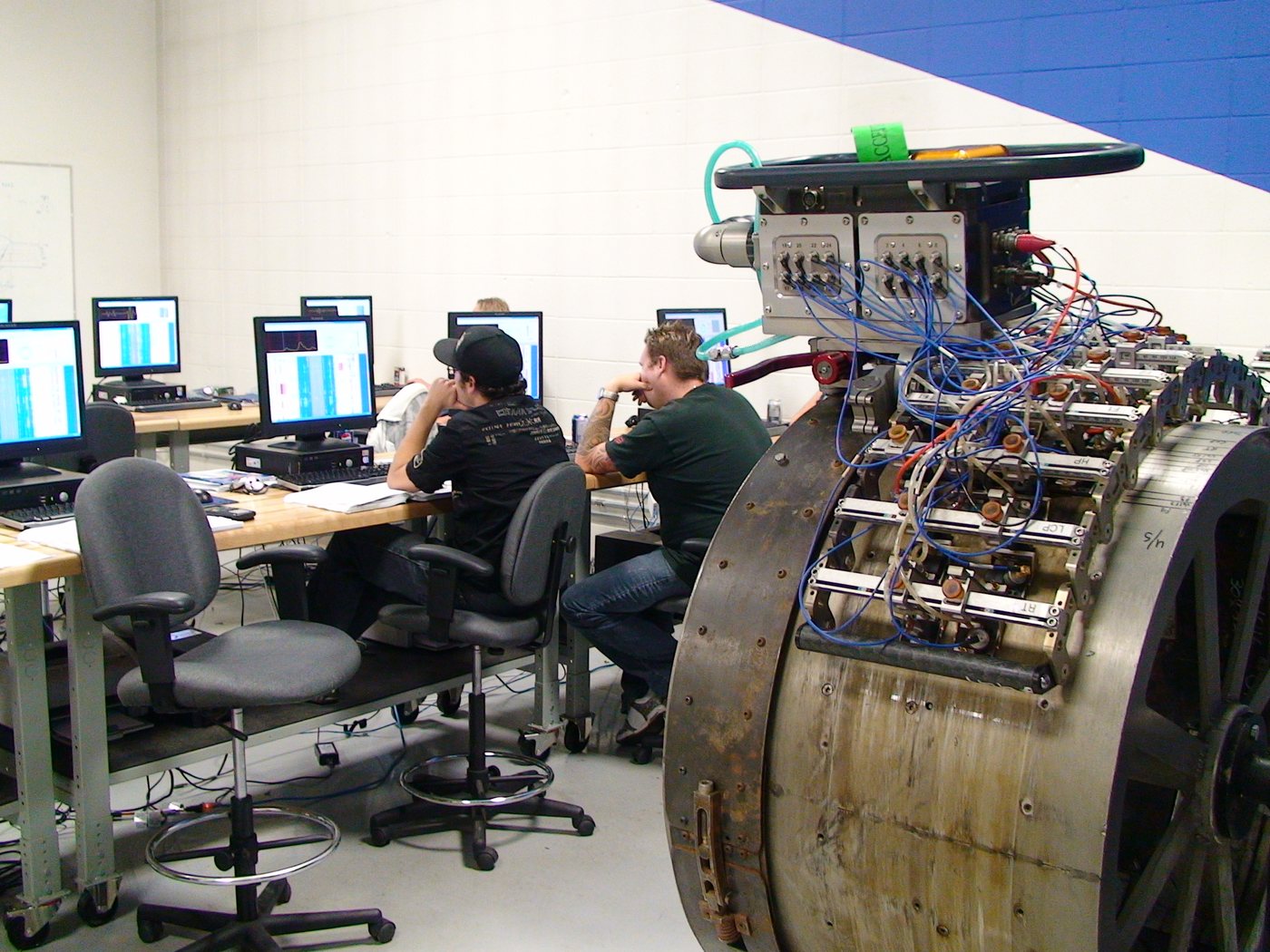
UT Scan is our own automated ultrasonic system — not rented, not licensed. We build, maintain, and advance it, so the field crew and the technology answer to one company.
Standardized written procedures and a single written practice, with Level III oversight, keep interpretation consistent from spread one to spread ten.
Union crews, certified to CGSB, staffed onto union projects and labour agreements through the QCCC structure.
More than two decades — inspecting onshore, offshore and industrial energy assets across North America and on international projects since 2003.
UT Quality’s work is on the record since 2003 — including major Canadian transmission projects, with deployments of up to 21 crews across 5 spreads on a single Canadian project.
Large-diameter mainline is the core of the Canadian work — 20″ to 48″, with 36″, 42″ and 48″ the most common. A sample of the documented Canadian record (lengths are UT Quality’s inspection scope, not total project length):
| Project | Operator | Diameter | Length | Crews / spreads |
|---|---|---|---|---|
| Trans Mountain Expansion | Trans Mountain | 36″ / 42″ | 383 mi | 21 crews / 5 spreads |
| Grand Rapids Pipeline | TC Energy | 20″ / 36″ | 286 mi | 7 crews / 5 spreads |
| Coastal GasLink — Work Package 3 | Coastal GasLink LP | 48″ | — | 10 crews / 3 spreads |
| Keystone XL — North Spread | TC Energy | 36″ | 162 mi | 5 crews |
| North Montney Mainline — Aitken Creek | TC Energy | 42″ | 113 mi | 13 crews / 3 spreads |
| BCML Loop 2 — ELKO Section | TC Energy | 48″ | 20 mi | 6 crews |
| Firebag | Suncor Energy | 30″ | 59 mi | 5 crews |
| Groundbirch Pipeline | TC Energy | 36″ | 48 mi | 5 crews |
Operators served
UT Quality Canada runs Canadian pipeline and industrial NDT operations, with the primary Canadian operation based in Alberta.
Canadian pipeline and industrial NDT operations based in Alberta — project support can extend across Canadian provinces as required through the union / QCCC structure.
Acheson, Alberta (Edmonton region) — UT Quality Canada’s base, in a facility shared with Argus NDT.
Crews mobilized to pipeline and facility projects across the provinces through the QCCC structure — crews scaled to the project.
Tell us about the project and scope — a UT Quality representative will follow up.
UT Quality Canada operates from a facility shared with Argus NDT in Acheson, Alberta (Edmonton region).
Deep-dive resources on the technology, the codes, and the decisions that put the right method on every weld.
AUT / PAUT
How an encoded scanner reads a girth weld zone by zone — and clears it without film.
Explore AUT →Radiography
Exposure by diameter plus 45 minutes of darkroom — add it in and digital is 5–48× faster to a decision, every size.
See the comparison →Heavy wall
RT exposure and source energy climb with wall thickness; AUT/PAUT scan time rises far more gently — typically 5–10 minutes a weld.
See the chart →Method selection
A clear decision flow for when RT is still right and when ultrasonics should be primary.
See the decision flow →The RAE family of companies