UT Quality Offshore delivers nondestructive testing for offshore pipeline construction — mainline, risers, tie-ins and spoolbase support, including AUT performed aboard pipelay vessels. The complete conventional and digital NDT suite, led by our proprietary UT Scan automated ultrasonic technology. An open-shop (merit-shop) operation, crewed on capability.

UT Quality Offshore is an open-shop (merit-shop) operation. For offshore programs that are not bound to a labor agreement, we crew and mobilize on technical capability and availability — the right technicians for the scope, on the program’s schedule.
Merit-shop crews assembled for the scope and schedule of the job — no labor-agreement requirement to staff an offshore crew.
Level II and Level III technicians selected on qualification and offshore experience, working to standardized written procedures.
Technicians and equipment mobilized to the dock, spoolbase or pipelay vessel on the program’s timeline — inspection performed above water, at the spoolbase and aboard the vessel.
UT Quality Offshore delivers the NDT methods offshore pipeline construction requires — automated ultrasonics (AUT), phased array (PAUT), semi-automated UT, TOFD, manual UT and the surface methods (MT/PT/VT) — with in-house Level II/III interpretation, performed above water at the spoolbase and aboard the pipelay vessel.
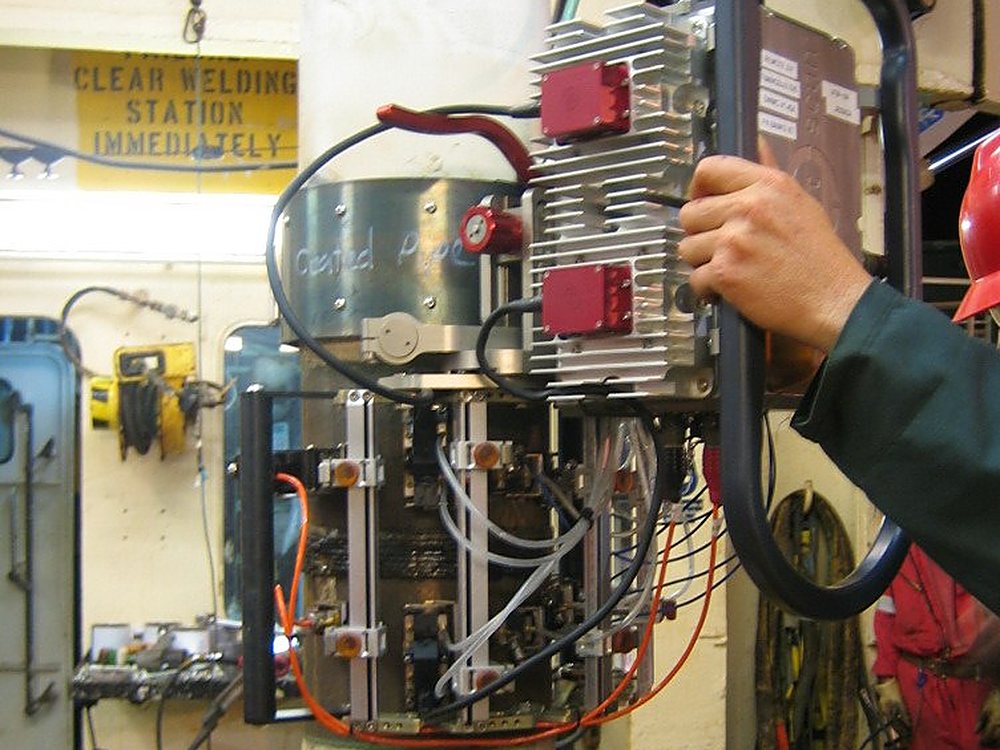
Proprietary UT Scan AUT — zonal phased array with TOFD — for fast, repeatable, fully encoded girth-weld inspection on offshore pipeline, riser and tie-in construction — including AUT performed aboard pipelay vessels.
Semi-automated UT — encoded phased array (PAUT) and TOFD on a hand-driven scanner — plus manual UT, for tie-ins, repair welds, fittings and spool pieces where a scanner band will not fit.
Computed radiography (CR), direct radiography (DR), real-time radiography (RTR) and conventional film RT.
Magnetic particle (MT), liquid penetrant (PT) and visual testing (VT) for surface and near-surface indications.
Weld inspection at the spoolbase and aboard the pipelay vessel — supporting subsea pipeline projects with inspection performed above water, before lay and tie-in.
Procedure development, calibration block development and support, offshore project supervision, and mobilization of technicians and equipment to offshore projects.
Our phased-array and automated ultrasonic systems put encoded, recordable data behind every offshore girth weld — faster than film, and with a defensible digital record the operator can audit.
Two different things, kept distinct: the codes and standards a project is inspected to, and the certifications our personnel hold.
Codes & standards we work to
Personnel certifications
Level I, II and III personnel qualified and certified under the employer’s written practice — to SNT-TC-1A and/or ANSI/ASNT CP-189, per the applicable written practice and project requirements.
Our UT Scan automated ultrasonic system maps every weld zone — root, fill, cap, volumetric and TOFD channels — into an encoded, permanently recorded weld record, built and maintained in-house.
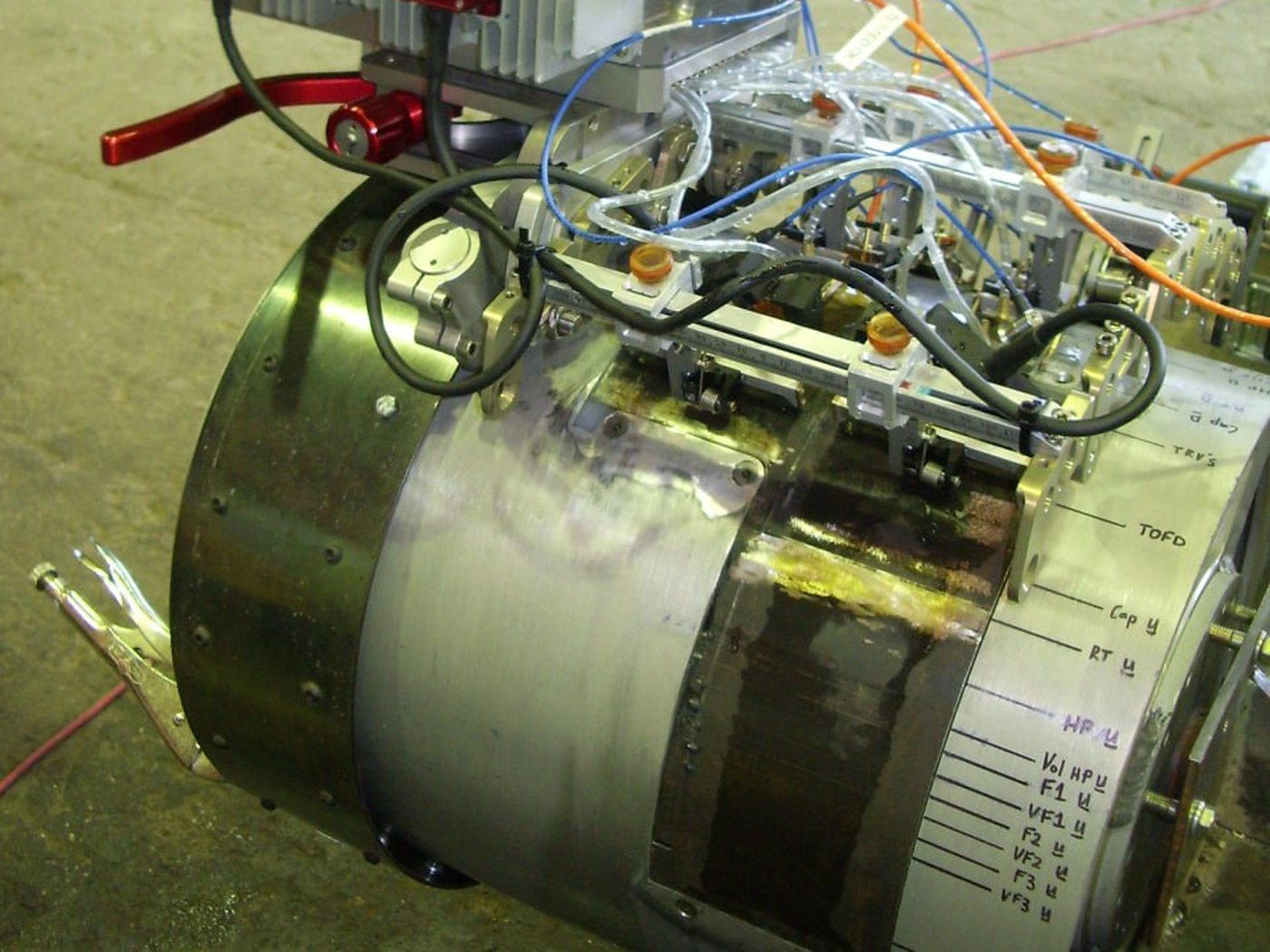
UT Scan is our own automated ultrasonic system — not rented, not licensed. We build, maintain and advance it, so the crew and the technology answer to one company.
Standardized written procedures and Level III oversight keep interpretation and acceptance criteria consistent across every vessel and crew.
Merit-shop crewing lets us staff on capability and schedule for offshore programs with no labor-agreement requirement.
More than two decades — inspecting onshore, offshore and industrial energy assets across North America and on international projects since 2003.
UT Quality has documented Gulf of Mexico experience involving offshore tiebacks and AUT performed aboard pipelay vessels — spoolbase double-joint fabrication, offshore tie-ins and steel catenary risers (SCR) for the major deepwater operators.
| Project | Operator / client | Scope | Size (welds or miles) | Crews |
|---|---|---|---|---|
| Caesar Tonga — subsea development, offshore tie-ins | Anadarko | 7.68″ / 12.13″ | 7,500 welds | 4 |
| Geauxpher — spoolbase & offshore tie-ins | Mariner Energy | 8″ | 5,160 welds | 4 |
| Appaloosa Development | ENI Petroleum | 8″ / 9.5″ | 2,750 welds | 4 |
| Ozona Feed — offshore tie-ins | Marathon Oil | 6.625″ / 10.75″ | 1,500 welds | 2 |
| Jubilee (Ghana field) — spoolbase double-joint fabrication | Technip (EPC contractor) | 12.75″ | 900 welds | 1 |
| Nansen subsea tie-back | Anadarko | 6.625″ | 205 welds | 4 |
| Walker Ridge gathering system (SCR) | Enbridge | 8.625″ / 10.75″ | 168 miles | 2–4 |
| Delta House (SCR) | LLOG | 6.6″–12.75″ | 124 miles | 2–4 |
| Appomattox | Shell | 10.75″ / 16″ | 68 miles | 3 |
Operators and contractors served
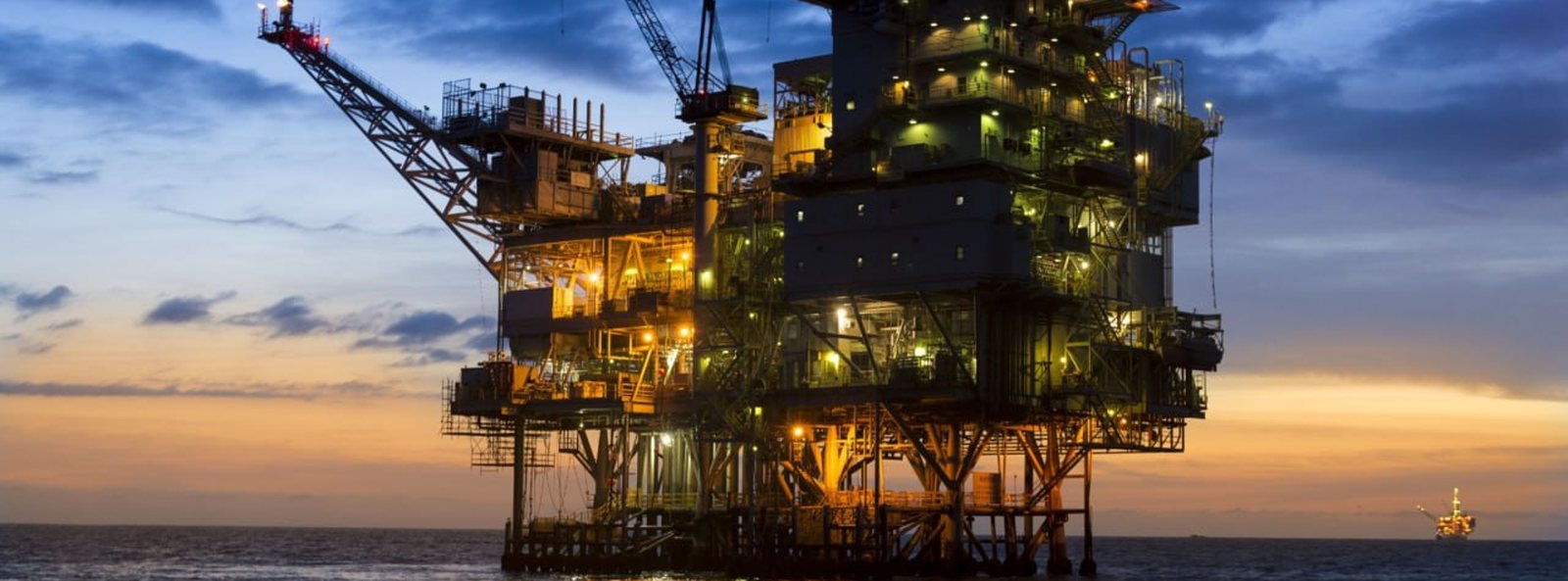
UT Quality Offshore mobilizes to offshore pipeline programs from shore bases and spoolbases to the pipelay vessel.
Documented Gulf of Mexico project experience — offshore pipeline construction, tie-ins, spoolbase support and pipelay-vessel operations.
Vessel-based, spoolbase and dockside — technicians and equipment mobilized to the pipelay vessel or spoolbase, with inspection performed above water.
Mobilization of technicians and equipment to offshore projects on the program’s timeline — crews scaled to the scope.
Tell us about the offshore program and scope — a UT Quality representative will follow up.
UT Quality Offshore is dispatched from our Katy, Texas headquarters at 1621 Primewest Parkway.
Deep-dive resources on the technology, the codes, and the decisions that put the right method on every weld.
AUT / PAUT
How an encoded scanner reads a girth weld zone by zone — and clears it without film.
Explore AUT →Radiography
Exposure by diameter plus 45 minutes of darkroom — add it in and digital is 5–48× faster to a decision, every size.
See the comparison →Heavy wall
RT exposure and source energy climb with wall thickness; AUT/PAUT scan time rises far more gently — typically 5–10 minutes a weld.
See the chart →Method selection
A clear decision flow for when RT is still right and when ultrasonics should be primary.
See the decision flow →The RAE family of companies